High Testosterone in Men: Symptoms, Causes, Diagnosis & Best Treatment – Z2Meds
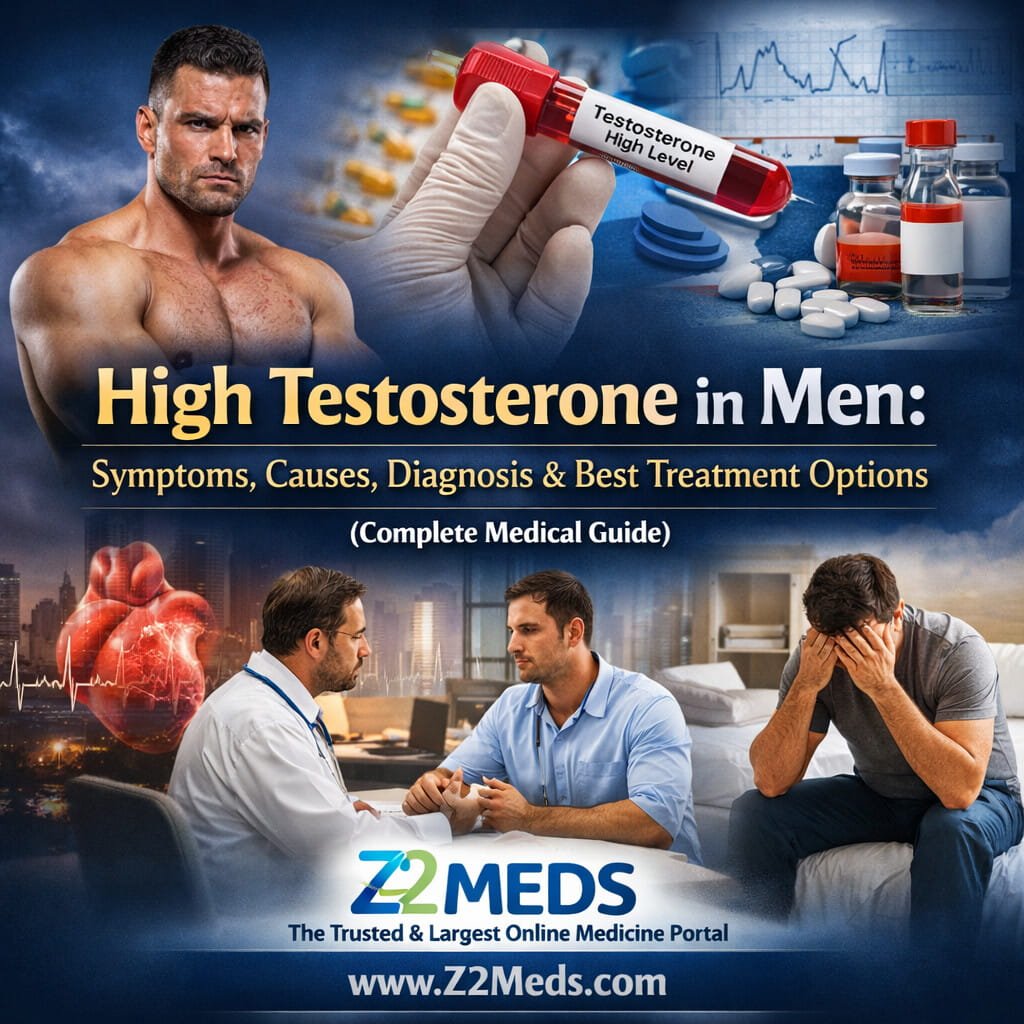
High Testosterone in Men: Symptoms, Causes, Diagnosis & Best Treatment Options (Complete Medical Guide)
High Testosterone in men can be as harmful as low Testosterone levels, yet it is often overlooked. While Testosterone is essential for muscle growth, energy, libido, and overall vitality, excessive Testosterone disrupts hormonal balance and can lead to serious physical, reproductive, cardiovascular, and psychological complications.
In this medically reviewed, optimized guide, we explain:
- What High Testosterone in men means
- Early warning signs and symptoms
- Root causes (medical, lifestyle, and medication-related)
- Diagnosis and lab testing
- Evidence-based treatment options
- When to seek medical help
High Testosterone in Men Symptoms, Causes, Diagnosis & Best Treatment Options – Z2Meds
What Is High Testosterone in Men?
High Testosterone in men is a condition where serum Testosterone levels exceed the healthy reference range.
Normal vs High Testosterone Levels
| Testosterone Level | Meaning |
|---|---|
| 300–1,000 ng/dL | Normal adult male range |
| 1,000–1,100 ng/dL | Upper-normal / borderline |
| Above 1,100 ng/dL | Clinically High Testosterone |
Testosterone is the primary male androgen responsible for:
- Muscle mass and strength
- Energy and stamina
- Mood and cognition
- Libido and erectile function
- Male secondary sexual characteristics
When levels rise excessively, the hormone starts interfering with other physiological systems, leading to complications.
Signs and Symptoms of High Testosterone in Men
Symptoms may be physical, reproductive, cardiovascular, or psychological.

Signs of high testosterone in men – Z2Meds
Physical Symptoms of High Testosterone
| Symptom | Description |
|---|---|
| Severe acne | Increased oil production causes acne on face, chest, and back |
| Oily skin | Sebaceous glands become overactive |
| Excess body hair | Increased facial and body hair growth |
| Hair loss | Accelerated male-pattern baldness due to DHT sensitivity |
| Rapid muscle gain | Muscle growth without proportional training |
Reproductive & Sexual Health Effects
| Effect | Explanation |
|---|---|
| Reduced sperm count | Body shuts down natural Testosterone production |
| Infertility | Poor sperm quality and motility |
| Testicular shrinkage | Common with external Testosterone or steroid use |
| Erectile dysfunction | Hormonal suppression disrupts natural erection pathways |
| Reduced libido | Paradoxical effect of hormonal imbalance |
Cardiovascular Symptoms
Excess Testosterone can strain the heart and blood vessels.
| Risk Factor | Impact |
|---|---|
| High blood pressure | Increased risk of stroke and heart attack |
| Heart palpitations | Irregular heartbeat |
| High red blood cell count | Leads to Polycythemia and clot risk |
| Blood clots | Increased risk of DVT and pulmonary embolism |
Psychological & Behavioral Changes
| Symptom | Effect |
|---|---|
| Aggression | Increased irritability and anger |
| Mood swings | Emotional instability |
| Anxiety | Nervousness and restlessness |
| Depression | Hormonal imbalance affects brain chemistry |
| Sleep apnea | Worsened breathing during sleep |
Did You Know?
The human brain has Testosterone receptors. Excessive levels may impair memory, decision-making, and emotional regulation.
What Causes High Testosterone in Men?
1. Testosterone Replacement Therapy (TRT)
Improper dosing or lack of monitoring during TRT is the most common cause.
Safety Warning:
Men using Testosterone gels or patches should avoid skin-to-skin contact with women and children for at least 6 hours after application.
2. Anabolic Steroids & Testosterone Boosters
- Synthetic Testosterone
- Bodybuilding steroids
- Unregulated supplements
These can raise levels far beyond safe limits.
3. Medical Conditions
| Condition | Effect |
|---|---|
| Pituitary disorders | Hormonal overproduction |
| Adrenal tumors | Excess androgen secretion |
| Testicular tumors | Increased Testosterone synthesis |
| Congenital adrenal hyperplasia | Genetic overproduction |
4. Medications
Certain drugs increase Testosterone levels:
- Clomiphene citrate
- Human Chorionic Gonadotropin (hCG)
5. Diet & Lifestyle Factors
Foods that naturally increase Testosterone:
- Fatty fish
- Avocados
- Nuts and seeds
- Leafy greens
Excessive intake may contribute to hormonal imbalance.
Diagnosis & Testing for High Testosterone
Blood Tests (Gold Standard)
| Test | Purpose |
|---|---|
| Total Testosterone | Measures total hormone level |
| Free Testosterone | Measures active hormone |
| LH & FSH | Pituitary function |
| Estradiol | Hormonal balance |
| Prolactin | Rule out pituitary issues |
Blood samples are usually taken early morning, when Testosterone peaks.
Physical Examination
Doctors evaluate:
- Skin and hair changes
- Muscle mass
- Testicular size
- Blood pressure
Treatment Options for High Testosterone in Men
Treatment depends on the underlying cause.
Medication Adjustments
- Reduce TRT dosage
- Stop anabolic steroids (under medical supervision)
- Avoid unprescribed Testosterone supplements
Never self-medicate Testosterone.
Medical Treatments
| Therapy | Purpose |
|---|---|
| GnRH agonists | Suppress Testosterone production |
| Anti-androgens | Block Testosterone effects |
Used only in severe cases with close monitoring.
Lifestyle Modifications
| Change | Benefit |
|---|---|
| Reduce red meat | Helps hormonal balance |
| Limit supplements | Prevents hormone spikes |
| Add cardio exercise | Lowers excess Testosterone |
| Reduce heavy lifting | Prevents hormonal overstimulation |
| Stress management | Normalizes hormone production |
Men above 40 should check hormone levels annually.
When to Seek Medical Help
Emergency Symptoms (Seek Immediate Care)
- Chest pain
- Difficulty breathing
- Sudden vision loss
- Severe headaches
- Signs of blood clots
Schedule a Doctor Visit If You Have:
- Persistent mood changes
- Sleep disturbances
- Fertility issues
- Unexplained acne or hair loss
FAQs on High Testosterone in Men
What is considered high Testosterone in men?
High Testosterone in men is diagnosed when blood Testosterone levels exceed 1,100 ng/dL. The normal adult male range is 300–1,000 ng/dL. Levels above this may cause hormonal imbalance and health complications.
What are the most common symptoms of high Testosterone in men?
The most common symptoms include severe acne, excessive body hair, hair loss, mood swings, aggression, high blood pressure, fertility issues, and sleep disturbances. Symptoms vary depending on the cause and duration of elevated levels.
Can high Testosterone be dangerous for men?
Yes. Persistently high Testosterone can increase the risk of heart disease, blood clots, infertility, mood disorders, sleep apnea, and prostate-related complications if left untreated.
Does high Testosterone cause infertility in men?
Yes. High Testosterone—especially from external sources like TRT or steroids—can suppress natural hormone production, leading to low sperm count and reduced fertility. Early treatment can often reverse this.
What causes high Testosterone levels in men?
High Testosterone is commonly caused by Testosterone Replacement Therapy (TRT), anabolic steroid use, hormonal medications, adrenal or testicular tumors, pituitary disorders, and excessive use of Testosterone-boosting supplements.
How is high Testosterone diagnosed?
Doctors diagnose high Testosterone using morning blood tests, including total Testosterone, free Testosterone, LH, FSH, and Estradiol levels. Multiple tests may be required for confirmation.
Can high Testosterone cause erectile dysfunction?
Yes. Although Testosterone supports sexual health, excessive levels can disrupt hormonal balance, leading to erectile dysfunction and reduced libido, especially when caused by external Testosterone use.
How can men lower high Testosterone levels naturally?
Natural methods include reducing red meat and processed foods, limiting supplements, increasing cardio exercise, managing stress, improving sleep, and avoiding anabolic steroids. Results may take 4–12 weeks.
Is high Testosterone linked to prostate problems?
High Testosterone may worsen prostate enlargement (BPH) symptoms but does not directly cause prostate cancer. Men with elevated levels should monitor prostate health regularly.
When should a man see a doctor for high Testosterone?
A doctor should be consulted if symptoms such as persistent acne, mood changes, fertility issues, sleep problems, high blood pressure, or heart palpitations occur.
Can high Testosterone levels return to normal?
Yes. With proper medical supervision, lifestyle changes, and dosage adjustments, Testosterone levels can return to a healthy range in most men.
Trusted Medical Sources (High DA & PA)
This article is medically aligned with data from:
- Mount Sinai
- Harvard Health Publishing
- Cleveland Clinic
Where to Buy Genuine Testosterone Medicines Safely
Z2Meds.com is a Trusted and Largest Online Medicine Portal, offering:
- FDA-approved medicines
- Affordable pricing
- Discreet delivery
- Global shipping
Save up to 90% on Testosterone Medicines
Popular Men’s Health Medications Available
| Medicine | Active Ingredient | Starting Price |
|---|---|---|
| Cenforce 200 mg | Sildenafil Citrate | $0.84/pill |
| Cenforce 100 mg | Sildenafil Citrate | $0.64/pill |
| Kamagra Oral Jelly | Sildenafil | $1.93/sachet |
| Vidalista 60 mg | Tadalafil | $0.90/pill |
Explore certified medicines at Z2Meds.com, sourced from licensed manufacturers. Buy genuine testosterone gels, injections, and capsules from Z2Meds – Trusted & Largest Online Medicine Portal
Conclusion
High Testosterone in men is a serious hormonal imbalance that affects physical health, fertility, cardiovascular function, and mental well-being. While Testosterone is vital for male health, too much can be dangerous.
Early diagnosis, proper medical supervision, lifestyle changes, and personalized treatment plans ensure long-term health and prevent complications.
If symptoms persist, consult a healthcare provider immediately.